Jewelry Box Inserts 101: Velvet, Suede, EVA and Foam Compared
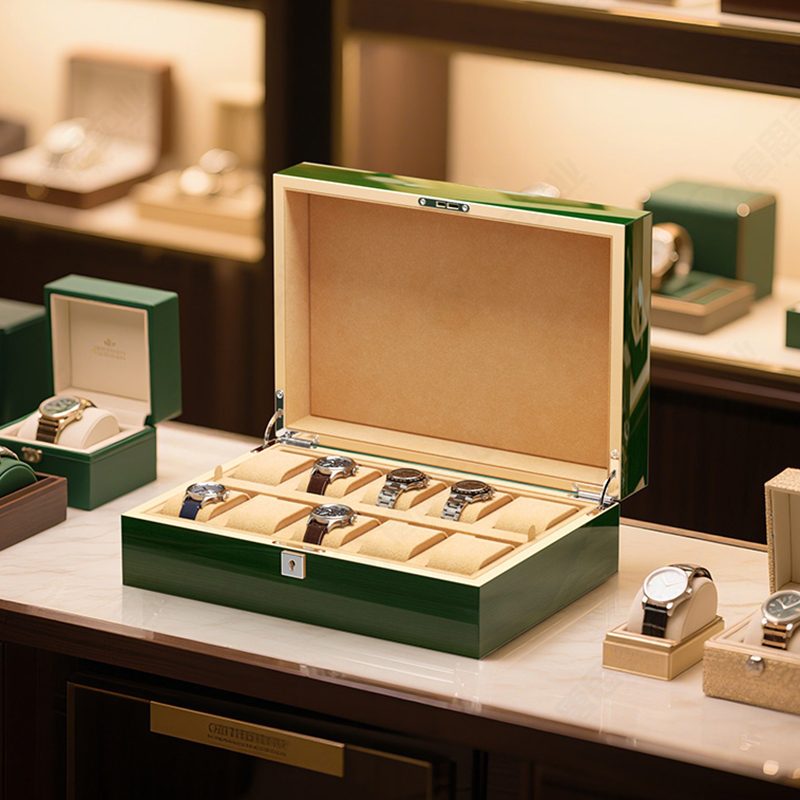
When buyers evaluate a jewelry box, they spend most of their time on the outside: wood species, lacquer, foil logo. But the customer who opens the box only interacts with the inside — and that is where perceived quality is won or lost. A flawless wooden box with a cheap, loose insert reads as cheap. The four materials below cover almost every insert we build, and each one solves a different problem.
What the insert is actually doing
An insert has three jobs, and no single material does all three perfectly. It must present the piece (hold it at the right angle, in the right position), protect it (absorb shock in transit and prevent scratching), and last (resist pilling, fading and compression over years on a shelf). Before comparing materials, decide which of the three matters most for your product — a display box for a boutique counter and an e-commerce shipping box need very different inserts.
Velvet — the classic luxury surface
Velvet is what most people picture when they imagine a jewelry box: a deep, light-absorbing pile that makes gold and gemstones glow against it. Its shortcoming is practical. The pile is directional — swipe it the wrong way and the shade shifts — and low-grade velvet sheds fibres onto the pieces it holds. Good velvet is specified by pile density and backing weight, not by colour alone, and it costs more than the alternatives. Use it when the unboxing moment is the product: boutiques, gifting, high-value presentation sets.
Suede (microfibre) — the modern default
Microfibre suede gives you most of velvet's soft, matte elegance with far fewer practical problems: it does not shed, wipes clean, resists abrasion, and looks consistent under store lighting. It is the workhorse lining in contemporary wooden boxes — and it is what you will see lining the interiors of most of our ready-to-ship watch boxes, together with matching watch pillows and removable cushions. If you are unsure which direction to go, suede is the safe default for both jewelry and watch packaging.
EVA foam — structure and protection
EVA is a firm, closed-cell foam that is die-cut into exact cavities for each piece. It is not decorative on its own — its value is mechanical. EVA holds its shape under load, does not absorb moisture, and grips each ring, pendant or bottle precisely where you want it. It is the right choice when protection outranks presentation: heavier items, multi-piece sets that must not shift, and inserts that need to survive repeated opening and closing in retail.
Foam wrapped in fabric — the combination most boxes actually use
In practice, premium inserts are a hybrid: an EVA or polyurethane foam core cut into the layout, wrapped in velvet or suede so the customer sees and feels fabric while the structure underneath does the work. The foam keeps slots crisp and prevents the collapsed, tired look that fabric-only inserts develop; the textile skin delivers the luxury feel. When you request a quote, this wrapped construction is usually what "velvet insert" actually means in a well-built wooden box.
Matching the insert to the jewelry type
Layout matters as much as material. Rings need individual parallel slots sized to band width; necklaces want a bar-and-hook compartment with a deep well so chains do not tangle; earrings work best on cards or a flocked pad with pierced pairs anchored; bracelets and bangles need open channels or roll cushions. For watches, the standard is a removable pillow on a suede-lined base — exactly the construction used across our custom watch boxes. A good supplier will propose the layout from your product line, not just accept a drawing.
How inserts affect cost and MOQ
Die-cut inserts add a tooling step, but for wooden and leather packaging the insert is rarely the cost driver — the box structure is. What inserts do affect is minimum order quantity: a fully custom insert layout is tied to the box order (our custom MOQ is 500 pcs per design), while a standard slot or pillow layout can be carried across designs. If you are testing the market first, starting from a proven insert layout inside a custom jewelry box keeps the tooling bill low.
The spec checklist for your purchase order
To get an accurate sample and quote, specify: insert material and colour (a Pantone reference beats adjectives), foam core thickness, slot dimensions matched to your actual pieces, fabric wrap construction, and any branding inside the lid or on the insert itself. Every custom project starts with a physical sample — production runs about 30 days after approval, and our team replies to inquiries within 24 hours.
The fastest way to decide is to feel the materials side by side. Browse finished interiors on our custom jewelry boxes page, compare structures in the packaging process guide, or send us your product list and we will propose an insert layout with a quotation.
For most projects, an EVA or foam core wrapped in microfibre suede is the best all-round choice: the foam gives structure and protection, the suede gives a soft matte luxury feel without shedding. Pure velvet suits high-presentation gifting boxes where maximum depth of colour matters and budget allows.
Low-grade velvet can shed fibres, especially when new. This is a material-quality issue, not an inevitability — specifying a higher pile density and proper backing eliminates it. Microfibre suede is the safe alternative if zero shedding is a hard requirement.
A fully custom insert is tied to the box order: our custom MOQ is 500 pcs per design. Using a standard slot or pillow layout inside a custom box keeps tooling lower and is a common way to start.
Yes. Every custom project includes a physical sample stage — roughly 15 days from drawings, including 3D digital proofing and up to two rounds of revisions — before mass production of about 30 days begins.