Wooden Tea Boxes: Moisture, Light, Aroma and the Structure of a Tea Chest
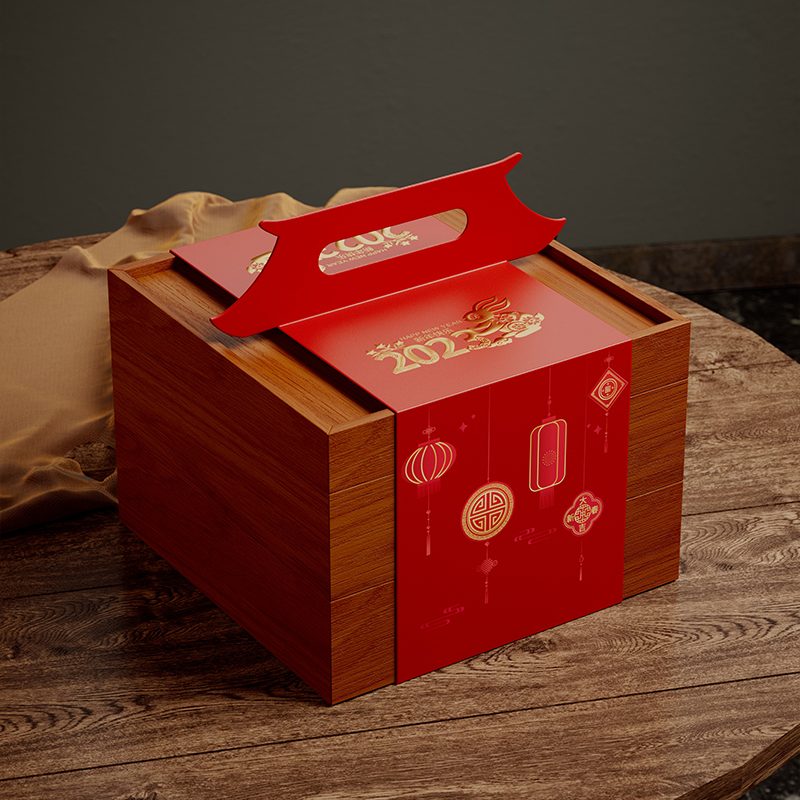
A high-value product needs packaging that sets it off, and tea is a product that also changes inside the box. Loose leaf, compressed cakes and sachets all react to moisture, light and the smells around them, so a wooden tea chest has to manage the environment before it manages the appearance. That makes it a more demanding brief than a generic gift box, and a more interesting one: almost every decision — body, compartment, closure, finish — has a functional reason.
This guide covers how premium tea presentation boxes are specified in wood, veneer, lacquer and leather-wrapped constructions: the four things tea asks of a box, the structures that hold several teas, the closure and the finish, and what has to be confirmed on a physical sample before a production run.
What tea asks of a box
Four things matter. Moisture: leaf that takes on humidity loses texture and aroma quickly. Light: a display lid that lets in daylight is a display decision, not a storage one. Aroma: tea picks up smells from finishes, adhesives and neighbouring products, which is why what cures inside a closed box matters more than how the outside looks. Form: compressed cakes, loose leaf and sachets have completely different footprints and need different compartments.
Be clear about what a wooden chest can and cannot do. Tea is normally sealed in its own inner pack before it goes into the chest; the box is the presentation and protection layer around that pack, not a substitute for it. A well-built chest slows humidity swings, keeps light off the product and stays neutral in smell. No box should be specified as extending shelf life, and any target-market requirement for materials that sit near the tea belongs in the brief and on the sample, not in a marketing claim.
Choosing the body: solid wood, veneer or MDF
Tea chests are often multi-tier, drawered or divided, and that pushes the body decision toward dimensional stability. A panel that moves with humidity will eventually make a drawer bind or a lid rock, so the choice of substrate is a functional one rather than a purely visual one.
| Body | What it gives a tea chest | What to watch |
|---|---|---|
| Solid wood | Weight, a continuous edge, a kept-and-repaired feel | Movement with humidity; grain continuity across lid and base |
| Veneer over a stable core | Controlled grain and colour, flat panels for drawers | Grain matching across tier fronts and the lid |
| MDF with lacquer | Flat, consistent surfaces for high-gloss or matte finish | Edge treatment and full curing before interior assembly |
A lacquered body gives crisp edges and a flat surface for branding; a veneered body gives the warmth of wood with less movement; solid wood gives the most substantial feel and needs the most care in drying and construction. Whichever is chosen, ask how the panels are conditioned before cutting and how the grain runs across the lid, the body and any drawer fronts — on a two-tier chest those faces are seen together every time it is opened.
Compartments and inserts: one chest, several teas
The compartment plan is the heart of a tea box. A single cavity suits one cake or one tin; a set of fixed dividers suits a tasting selection; removable trays let one chest serve a changing seasonal mix; a drawer or a second tier adds tea ware without disturbing the leaf. Multi-tier, pull-out and double-door formats all appear in premium tea gifting, and the choice is mostly about how many SKUs have to be visible at once.
Cut the compartments from the real product, not from a drawing. A tray sized to a nominal tin will rattle a slightly smaller one and refuse a slightly larger one. Inserts range from EVA and shaped foam through velvet- and suede-wrapped mouldings to rigid moulded trays; each should hold its item at two points without force and without rattle. List the lining, any foam, the adhesive and any elastic as separate specification fields, and state any material or compliance requirement for the surfaces near the tea at sampling so it can be checked on the physical sample.
Closure and seal: how tight is right
Less air exchange means slower moisture pickup and less aroma transfer, so the closure is functional. A lid should sit flush on all four sides, close with even resistance and show no rocking when the chest is set down. A hinged lid with a poorly aligned leaf leaks along one edge; a lift-off lid with too much clearance does the same. A magnetic catch should hold under a lifted load, not only under finger pressure, and a mechanical clasp should pull the two halves together rather than just look decorative.
There is a caveat worth writing into the brief: a fully sealed chest that traps moisture, or that is closed before its finishes have cured, can be worse than one that breathes slightly. The goal is a close, even fit with dry, fully cured interiors, not a hermetic seal at any cost. Specify the hinge as a part — leaf length, opening angle, whether a stay holds it open, whether a soft-close action is wanted — and ask for it to be cycled repeatedly on the sample.
Finishes, curing and aroma
This is the section a tea brief cannot skip. A lacquered or wrapped chest passes through ten production steps: cutting the board or solid wood, CNC shaping, fine sanding, primer, colour coat, controlled-temperature curing, polishing, hardware fitting, interior assembly, and inspection and packing. High-gloss piano lacquer is built up in layers, with curing and polishing in stages; matte lacquer hides fingerprints better but shows sheen variation between spray batches.
Every layer has to be fully cured before the interior is assembled. An uncured coating or a rubber-based adhesive keeps releasing volatiles into a closed box long after packing, and tea will record that. Ask for the interior to be specified as a list of materials rather than a single name, give the finish its full curing time, and run a simple closed-box test on the sample: leave a sealed chest in normal conditions for a few weeks, then open it. It is an inexpensive check compared with discovering an odour after a full production run.
Leather-wrapped tea chests
A leather-wrapped chest gives a softer hand-feel, hides the scuffs a gift box picks up in use, and supports the suitcase, double-door and multi-drawer formats that premium tea sets often use. Wrapped corners should be taut with no lifted edges; a handle should be fixed into the frame with a plate behind the panel rather than driven through a veneered surface; metal corners, rivets and a latch belong in the same conversation as the wrap.
Be precise about what the wrap actually is. A smooth grain, a printed grain, an embossed pattern and a genuine hide are different materials, and a photograph cannot prove which one is being quoted. Split the specification into four fields — outer covering, inner substrate, surface texture, and lining or insert — and confirm all four on the sample. That discipline stops a single word like leather from standing in for a material specification, and it matters here because everything inside the wrap shares the same closed air as the tea.
Grain, colour and the hand work
On a tea chest with a lid, a body and several tier fronts, wood grain and colour are read as one surface. Grain direction should be specified, and on veneer the pattern should continue across the joint between lid and base. Machines cut the panels to identical size; aligning the grain, wrapping a corner and setting a soft-close hinge are done by hand, and that is where a chest stops looking assembled and starts looking made.
Colour is the same problem across materials. A brand colour has to hold on lacquer, on veneer and on a leather wrap at once, and those three surfaces take dye and finish differently. Agree an approved reference and a viewing condition at sampling, check sheen variation between panels sprayed in different batches, and keep the approved sample as the master for any repeat run. A lining that is a shade different on the last two hundred units is visible when a whole set is displayed together.
Sampling, tooling and what to verify on the physical sample
Custom programmes start at 500 pcs per design. Sampling takes about 15 days and includes 3D digital proofing plus two rounds of revision; production runs about 30 days after sample confirmation. Use the sampling window on the things a render cannot show: compartment fit against the real tins or cakes, the lid closing on all four sides, the hinge cycling, the drawer clearance, the grain match, and the smell of a closed chest after a few weeks.
Ask for the packed sample as well as the bare one, and agree the outer packing, the acceptance criteria and the inspection point in writing before production starts. Each of the ten production steps is checked internally before a batch moves on, and third-party pre-shipment inspection is accepted as standard. Standard terms are T/T with a 30 percent deposit and 70 percent before shipment, so the natural inspection point is before the balance is released.
Quantities, terms and how to brief it
| Specification field | Why it belongs in the first enquiry |
|---|---|
| Tea formats and the real dimensions of each tin, cake or sachet | Sets every compartment and the lid depth |
| Structure: single cavity, dividers, tray, drawer or two tiers | Fixes the tooling and the panel sizes |
| Body, finish and grain direction | Controls stability, appearance and curing time |
| Lining, insert, adhesive and any material requirement near the tea | Keeps the interior neutral and verifiable |
| Closure, hardware and opening angle | Controls air exchange and daily handling |
| Logo method, artwork files and approved colour reference | Aligns branding across wood, lacquer and wrap |
| Quantity, outer packing, shipping route and delivery date | Aligns MOQ, production and freight |
Design files are accepted in AI, C4D or PDF, enquiries are answered within 24 hours, and shipments leave on EXW or FOB Guangzhou terms by DHL, FedEx or UPS express, or by FCL or LCL sea freight. Certifications held include ISO 9001, FSC, CE, RoHS and REACH. See custom wooden boxes for the bodies a tea chest is built on, custom leather boxes for wrapped formats, custom rigid boxes for structural options, custom packaging boxes for the programme, and our service process or contact us to send a tea chest brief for quotation.
It helps, but it is not the tea's primary barrier. Tea is normally sealed in its own inner pack before it goes into the chest; the wooden box is the presentation and protection layer around it. A well-built chest slows humidity swings, keeps light off the product and stays neutral in smell. No box should be specified as extending shelf life.
It depends on how many items have to be visible at once. A single cavity suits one cake or tin, fixed dividers suit a tasting selection, removable trays suit a changing seasonal mix, and a drawer or second tier adds tea ware. Cut every compartment from the real tin, cake or sachet rather than a nominal drawing, so nothing rattles or binds.
Yes. Lacquer, veneer adhesive and the glue bonding the lining all share the same closed air as the tea. Every coating layer must be fully cured before the interior is assembled, and the interior should be specified as a list of materials rather than one name. A simple closed-box test on a sample left for a few weeks in normal conditions is a cheap way to check for residual odour.
Custom programmes start at 500 pcs per design. Sampling takes about 15 days and includes 3D digital proofing plus two rounds of revision, with production in about 30 days after sample confirmation. Standard terms are T/T with a 30 percent deposit and 70 percent before shipment, and third-party pre-shipment inspection is accepted.