Watch Gift Boxes: Specifying a Single-Watch Presentation Box for Retail and Direct-to-Consumer Delivery
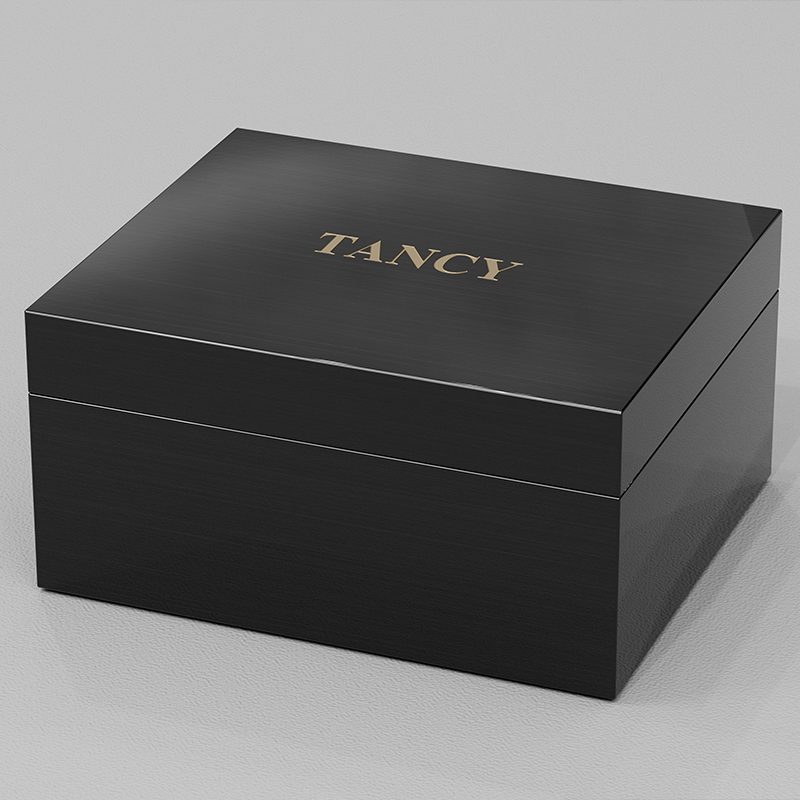
Packaging is never just a box — it is the first thing a customer touches and the last thing they remember. That is nowhere more literal than in a watch gift box: it is handed over at the same moment as the watch, opened once, in front of the person who paid for it, and often after a journey through a courier network rather than a display cabinet.
A single-watch presentation box is therefore a different brief from a collector case or a counter display. It has to carry one watch, one brand impression and one transit leg, and it has to be packed and costed per unit. This guide sets out how to specify one — dimensions, opening, branding, insert, protective packing, and the choice between in-stock and custom — for wooden, lacquered and leather-wrapped bodies.
What a watch gift box has to do differently
A collector case is designed to be opened every day and to hold a growing collection. A counter display box is designed to be looked at through a lid and handled by staff. A gift box is designed for one watch, one opening and one journey. Those three uses pull the specification in different directions, and treating them as variants of the same box is the most common mistake in a first brief.
| Brief | What it optimises | What it tends to get wrong |
|---|---|---|
| Retail gift box | One watch, one reveal, ships with the product | Under-specifying transit protection |
| Collector case | Capacity, repeated opening, long-term storage | Too large and too heavy for a single-watch purchase |
| Counter display box | Visibility, staff handling, footprint on the counter | No outer packing for a doorstep delivery |
The gift box also has a constraint a collector case does not: it ships with every watch, so its size, its weight and the way it packs into an outer carton are multiplied across the whole order. A few millimetres of unnecessary lid depth become a larger carton, and a larger carton changes the freight calculation.
Start from one watch, not a collection
Dimensions in a gift box come from one watch, not from a slot family. Case diameter sets the pillow width; bracelet or strap height sets the lid clearance; the total stack height decides how deep the base has to be. A chunky bracelet that sits proud of the case needs a taller cavity than a dress watch on leather, and a box cut for the average will either rattle the smaller watch or press on the larger one.
If the same box has to serve several models, say so at the start. The usual answers are a removable cushion, a two-part insert or a pillow with a controlled taper that holds a range of bracelet sizes. All three have to be tooled during sampling; a divider added after the insert is cut is a new tool, not an edit. Send the largest and smallest watch in the programme as physical samples or drawings in AI, C4D or PDF, and specify the pillow firmness rather than leaving it to a factory default.
The opening: a reveal that works in one hand
The opening is a structural decision on a rigid wooden or leather-wrapped body, not a styling afterthought. It fixes the panel sizes, where the joints fall, where a hinge can be seated, how deep the insert can be and how the finished box sits in its outer packing. For a gift box it also has to work in one hand: the customer is usually standing, holding the box, and lifting a lid or pulling a tray without putting anything down.
A two-piece lift-off lid is the simplest to tool and the hardest to get right on fit — it must slide on with even resistance and sit flush on all four sides. A hinged lid keeps the two halves together and allows a soft-close action, but the hinge leaf has to be seated into the frame and the lid has to close without rocking. A drawer sequences the reveal, but needs designed clearance so wood movement does not make it bind. Machines cut the panels to identical size; setting a soft-close hinge, wrapping a leather corner and aligning wood grain across a lid and base are done by hand, and that hand work is where the sense of a gift comes from. Settle the opening in the 3D digital proofing stage, where a change costs nothing.
Branding on the outside, restraint inside
A gift box carries the brand at the moment of handover, so the outside has to be deliberate and the inside restrained. Hot foil stamping, screen printing, debossing and laser engraving each behave differently on lacquer, veneer and leather, and artwork should be supplied in AI, C4D or PDF. A mark sits well on a lid, a clasp plate or a metal nameplate; it sits badly repeated across a lining, where it competes with the watch.
Keep two decisions separate: the branding on the box and the identification on the outer packing. Barcodes, SKU labels and shipping marks belong on the export carton, not on a lacquered lid that will be kept on a desk. Ask for both to be shown at sampling, including a proof of the logo position, because a mark a few millimetres off centre is obvious on a small single-watch box.
The insert: holding a watch that will be shipped
In a display case the insert presents; in a gift box it also protects. The watch should be supported at two points — the pillow under the case and a controlled clearance at the lid — so it cannot pivot when the carton is moved. A watch held at a single point in the middle will rotate in transit and mark the lining, and a watch pressed by the lid will mark the crystal or the bracelet.
Velvet and suede or microfibre are the usual presentation surfaces; EVA and shaped foam give structure for a box that ships directly; fabric-wrapped moulded trays hold their shape longest. Whichever is chosen, check the adhesive line and colour consistency across the batch, and ask for the closed box to be shaken and cycled on the sample. A pillow that is too soft lets the watch sag; one that is too hard makes the bracelet sit proud of the cavity. Removable cushions should lift out without a tool and without snagging the lining.
Packing the presentation box for transit
The box is the product and it still has to be packed. This is the section most gift-box briefs leave out, and it is the one that decides whether the first opening is a good one. Each box needs an individual protective wrap, corner protection where a projecting lid or a pair of doors sits, and an outer carton with no void for the box to travel in. A five-ply export outer carton is the standard for a rigid wooden or leather box, and it has to be sized to the finished box rather than ordered from a generic list.
Agree the packing specification at the same time as the box, and check a packed sample rather than a bare one. Stack strength matters if cartons are palletised, and a glossy lacquer lid needs a different separator from a matte or leather one. Shipments leave on EXW or FOB Guangzhou terms, by DHL, FedEx or UPS for express and by FCL or LCL sea freight for larger orders; the packing has to suit whichever route the order actually takes. Third-party pre-shipment inspection is accepted as standard, so the packing method is worth listing among the acceptance criteria.
Retail shelf versus doorstep: two briefs, one box family
Most watch programmes need the same box to work in two channels. On a retail shelf it has to stack, sit square, show a consistent lid across a run and take a label on the outer packing; the shop handles the last metre. In direct-to-consumer delivery the box travels alone through a courier network, so the protective packing, the closure and the insert do the work that shop staff would otherwise do.
The economical answer is one box family with two packing levels, not two tools. Keep the body, opening, insert and branding identical, then specify a retail carton and a single-unit protective pack for the same box. Agree both at sampling: a lid that survives a shelf can still scuff against a loose insert in transit, and adding a corner protector after tooling is far cheaper than re-cutting a lid.
In-stock or custom: which route fits a launch
Two routes are available and they suit different stages. The in-stock range, sold under the Tancy name, covers more than 100 ready-to-ship designs with a 50-unit minimum; it is the fast way to put a credible wooden or leather-wrapped box beside a first watch release, and it does not carry custom branding unless that is confirmed for the specific style. Full custom starts at 500 pcs per design and gives control over dimensions, opening, finish, insert, logo and packing.
Sampling takes about 15 days, including 3D digital proofing and two rounds of revision, with production in about 30 days after sample confirmation. Enquiries are answered within 24 hours. A common pattern is to launch on an in-stock box, learn which dimensions and finishes customers actually respond to, then move to a custom tool once volumes justify it — rather than committing to a custom mould before the first shipment has landed.
What to put in the enquiry
| Specification field | Why it belongs in the first email |
|---|---|
| Largest and smallest watch: case diameter, bracelet height, total height | Sets the cavity, pillow and lid clearance |
| Channel: retail shelf, direct-to-consumer, or both | Decides the packing level and the closure |
| Opening style and how the box will be handled | Fixes panels, hardware and tooling |
| Logo method and artwork files (AI, C4D or PDF) | Decides the proof and where the mark sits |
| Insert, lining and adhesive requirements | Protects the watch and the lining in transit |
| Outer packing and shipping route | Prevents damage that no final inspection can undo |
| Quantity, target delivery date and acceptance criteria | Aligns MOQ, sampling and production windows |
Standard terms are T/T with a 30 percent deposit and 70 percent before shipment; every production step is checked internally before a batch moves on, and third-party pre-shipment inspection is accepted. Certifications held include ISO 9001, FSC, CE, RoHS and REACH. See custom watch boxes for the custom programme, in-stock watch boxes for the Tancy range, custom wooden boxes and custom leather boxes for the two bodies these gift boxes are built on, and our service process or contact us to send a single-watch brief for quotation.
A gift box is built for one watch, one opening and one delivery, so it is smaller, lighter and specified with protective outer packing. A storage or collector case is built for capacity and repeated opening over years, with tiers, trays and a hinge that will be cycled daily. The two use similar materials but different dimensions, inserts and packing.
Yes, if it is specified that way from the start. A removable cushion, a two-part insert or a tapered pillow can hold a range of bracelet sizes, but each has to be tooled during sampling. Send the largest and smallest watch in the programme as samples or drawings in AI, C4D or PDF, and confirm the fit on the physical sample.
Custom programmes start at 500 pcs per design. The in-stock Tancy range starts at 50 units and covers more than 100 ready-to-ship designs. Sampling takes about 15 days including 3D digital proofing and two rounds of revision, with production in about 30 days after sample confirmation; enquiries are answered within 24 hours.
Each box needs an individual protective wrap, corner protection where a lid or doors project, and a five-ply export outer carton sized to the finished box with no void. Agree the packing at sampling and check a packed sample. Shipments leave EXW or FOB Guangzhou by DHL, FedEx or UPS express, or by FCL or LCL sea freight, and third-party pre-shipment inspection is accepted.