Comparing Custom Packaging Quotes: Why Two Suppliers Rarely Quote the Same Wooden Box
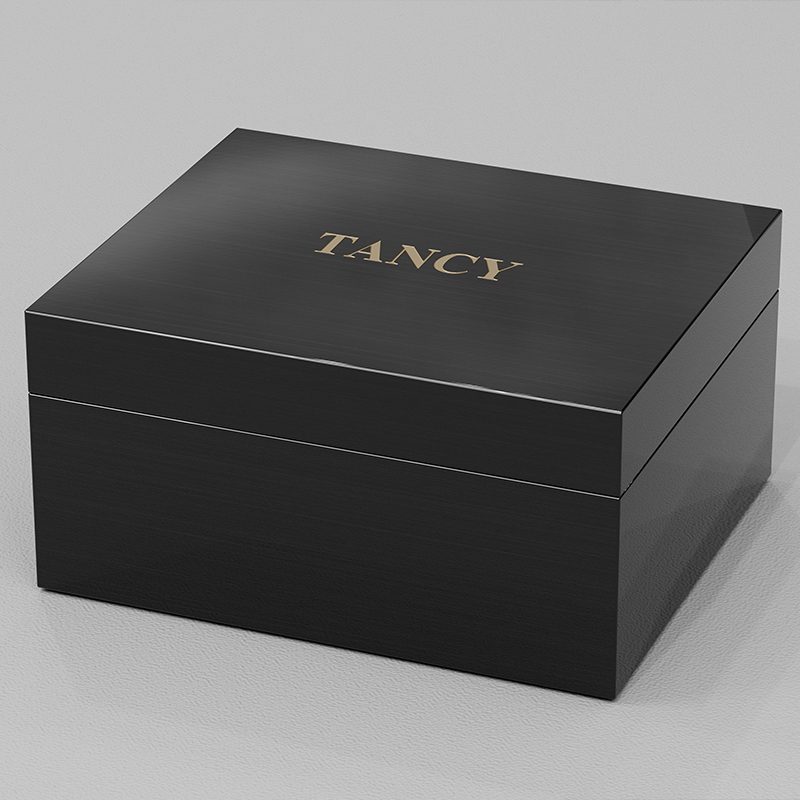
Packaging is never just a box — it is the first thing a customer touches and the last thing they remember. That is exactly why two quotations for what looks like the same wooden box so often sit far apart. One supplier has priced a solid-wood body with a shaped insert and a soft-close hinge; the other has priced a veneered panel, a generic foam block and a lift-off lid. Both may be honest. They are simply not quoting the same object, and no amount of negotiation fixes a comparison that was never like-for-like.
This guide is about the purchasing step that comes before a number: how to make two offers comparable. It covers the specification fields that quietly change a quotation, the line items a serious quote should show, where one-off charges sit, and what to freeze in writing before you ask anyone to quote. It is a companion to our guide on custom packaging boxes, not a price list — figures depend on your materials, dimensions, finish and quantity, and are always given against a specification.
Why two quotations for the same box rarely match
A packaging enquiry is usually a photograph, a rough size and a target quantity. From that, each factory has to guess at a dozen things: the body construction, the finish system, the insert, the hardware, the logo method, the packing and the trade term. Those guesses are where the gap comes from. A high-gloss piano lacquer box and a matte lacquer box can share a silhouette but not a production route, because the mirror finish is built up in layers with controlled-temperature curing and staged polishing between coats.
The gap is rarely about who is cheaper to deal with. It is about scope. A quote that includes 3D digital proofing, two rounds of sample revision, a shaped insert and a five-ply export outer carton is a different product from one that lists only the empty shell. Before comparing figures, compare what each supplier has assumed. Six client-facing stages sit behind every custom programme — requirement discussion, brand research, creative design, material development, cost optimisation, and manufacturing and delivery — and a quote that skips the first four has simply pushed that work onto you.
Start with a specification, not a picture
The single most effective way to get comparable offers is to send the same one-page specification to every supplier. A photograph is a styling reference, not a build document. The brief should state the body and substrate, opening style, external and internal dimensions, finish and colour reference, insert and lining, hardware, logo method and artwork files, packing, quantity, trade term and delivery date. Where a dimension is derived from a product — a bottle, a watch, a jar — send the product drawing or the real item.
Two fields are consistently missed. The first is tolerance: what counts as an acceptable fit between a lid and a base, and what counts as a critical versus a minor defect. The second is the reference sample — agree that the approved physical sample becomes the master for the run and for any repeat order. Put both in writing at enquiry stage. A written specification does not just improve the quote; it becomes the acceptance criteria if the bulk order is ever disputed. Design files are accepted in AI, C4D or PDF, so there is no reason to leave a dimension to be inferred from a render.
The body: solid wood, veneer, MDF or leather wrap
Construction is the largest hidden variable. Solid wood gives weight, a continuous edge and a box that can be kept and repaired, but it moves with humidity and needs careful drying. Veneer over a stable core gives controlled grain and colour and flat panels for drawers. MDF with lacquer gives the flattest surface for a high-gloss or matte finish and the crispest edges. A leather-wrapped construction adds a softer hand-feel and hides the scuffs a gift box picks up in use, but it is a four-part specification, not one word: outer covering, inner substrate, surface texture, and lining or insert.
| Body | What it changes in a quote | What to specify |
|---|---|---|
| Solid wood | Material, drying, grain matching, machining | Species, grain direction, conditioning |
| Veneer over stable core | Panel preparation, grain continuity across lid and base | Veneer species, core, sequence matching |
| MDF with lacquer | Primer, colour coats, curing, polishing stages | Gloss level, edge treatment, full cure |
| Leather-wrapped | Wrapping labour, corners, substrate, hardware fixing | Outer covering, substrate, texture, lining |
A photograph cannot prove which of these you are being quoted. Ask each supplier to name the body in the quotation. If two quotes describe the same visible box but name different substrates, they are not comparable and the lower figure is not a saving.
Finish and surface: where labour hides
Rigid boxes are not made in one operation. A wooden or leather-wrapped body passes through ten production steps: cutting the board or solid wood, CNC shaping, fine sanding, primer, colour coat, controlled-temperature curing, polishing, hardware fitting, interior assembly, and inspection and packing. Each step is checked before the batch moves on. A quote that prices a finish as a single coat has not priced that sequence.
Machines do the precision work — cutting, shaping and surface consistency — while the sense of luxury comes from the hand work: wrapping leather corners, aligning wood grain across a lid and a base, and setting a soft-close hinge. Much of that workforce has been together for over a decade, which is why the hand-finished details are repeatable rather than accidental. Ask what finish system is included, how many coats and curing stages, whether the approved colour reference is a physical chip, and whether sheen variation between spray batches has an agreed tolerance.
Interior and insert: the line item most often missing
The box body gets the attention; the insert prevents the damage. Velvet and suede or microfibre are the usual presentation surfaces, EVA and shaped foam give structure for a box that ships directly, fabric-wrapped mouldings look better on a shelf, and rigid moulded trays hold their shape longest. Each has a different material cost, tooling requirement and assembly time. A quote that says only "foam insert" leaves all of that open, and the revision will arrive after you have already compared figures.
Specify the insert as a list of separate fields: lining fabric, foam or moulding, the adhesive, any elastic or tab, colour, and fit tolerance against the real product. A product held at one point will pivot in transit and mark the lining; a product pressed by the lid will mark itself. Ask for the closed box to be shaken and cycled on the sample, and for removable cushions or dividers to lift out without a tool and without snagging the lining. If a divider is needed for two sizes, it has to be tooled during sampling — it cannot be added after the insert is cut.
Hardware, branding and tooling: one-off versus per-unit
Quotations mix two kinds of charge, and the comparison breaks down when they are not separated. Per-unit costs scale with quantity: the body, the finish, the lining, the assembly. One-off costs do not: a mould for a shaped insert, a jig for a drawer, a die for hot foil stamping or debossing, and the sampling work itself. Ask for them as explicit line items, and ask who holds the tooling after the run — that matters the moment you reorder.
Branding method belongs here too. Hot foil stamping, screen printing, debossing and laser engraving behave differently on lacquer, veneer and leather, and they carry different setup and per-unit economics. Agree where the mark sits — a lid, a clasp plate or a metal nameplate — and keep the branding on the box separate from the identification on the outer packing. Barcodes and shipping marks belong on the export carton, not on a lacquered lid that will be kept on a desk. Ask for a proof of logo position at sampling; a few millimetres off centre is obvious on a small box.
Quantity, MOQ and the in-stock alternative
Setup costs are spread across the run, so quantity changes the unit figure as much as any material. Custom programmes start at 500 pcs per design. If your volume is below that, or if you need to test a market before committing to a tool, the in-stock route is a different proposition entirely: the ready-to-ship range, sold under the Tancy name, covers more than 100 designs with a 50-unit minimum. It gives you a credible wooden or leather-wrapped box quickly, without custom branding unless that is confirmed for the specific style.
Put the exact quantity, and any planned second run, into the enquiry. Ask each supplier to state the quantity breaks and whether a repeat run reuses the same tooling and the signed reference sample. Two quotes at different assumed volumes are not comparable; nor is a custom quote comparable with a stock quote. A common pattern is to launch on an in-stock box, learn which dimensions and finishes customers respond to, then move to a custom tool once volumes justify it.
Trade terms, packing and freight in the quotation
A unit figure means different things under different trade terms. Shipments leave on EXW or FOB Guangzhou terms, by DHL, FedEx or UPS express for smaller orders, and by FCL or LCL sea freight for larger ones. Ask which term the quote is built on and what it includes: the individual protective wrap, corner protection where a projecting lid or doors sit, and a five-ply export outer carton sized to the finished box rather than pulled from a generic list. Packing is not a minor line — on a rigid wooden or leather box it decides whether the first opening is a good one.
Also ask what documentation and inspection are included. Each of the ten production steps is checked internally before a batch moves on, and third-party pre-shipment inspection is accepted as standard. Certifications held include ISO 9001, FSC, CE, RoHS and REACH. Standard terms are T/T with a 30 percent deposit and 70 percent before shipment, which makes pre-shipment the natural inspection point. Book the inspection date when the sample is approved, because production runs about 30 days and inspectors need lead time.
A checklist for comparing two offers
Once both quotes name the same body, finish, insert, hardware, branding, packing and trade term at the same quantity, the comparison becomes simple — and often the two figures are much closer than they first appeared. Where they still differ, ask rather than assume: a different curing time, a different lining, a different inspection standard, or a different assumption about who holds the tooling is usually the answer.
| Line item | What to confirm in both quotes |
|---|---|
| Body and substrate | Solid wood, veneer over core, MDF, or leather-wrapped (all four fields) |
| Finish system | Gloss or matte, coats, curing, polishing, approved colour reference |
| Insert and lining | Material, moulding, adhesive, fit tolerance, removable parts |
| Hardware and opening | Hinge, clasp, stay, soft-close action, opening angle |
| Branding | Method, position, artwork files (AI, C4D or PDF), logo proof |
| One-off charges | Moulds, jigs, dies, sampling; who holds them after the run |
| Quantity and breaks | Exact units, MOQ, repeat-run tooling and reference sample |
| Packing and trade term | Individual wrap, outer carton, EXW or FOB Guangzhou, freight mode |
| Inspection and terms | Acceptance criteria, third-party inspection, T/T schedule |
Sampling takes about 15 days and includes 3D digital proofing plus two rounds of revision, with production in about 30 days after sample confirmation. Enquiries are answered within 24 hours. Use the sampling window on the things a render cannot show, then keep the approved sample and the frozen specification together as the reference for every future run. For the body choices behind a quote see custom wooden boxes and custom leather boxes, and for structural options see custom rigid boxes. Our service process sets out the six stages from brief to delivery, and contact us to send one identical specification to start a comparable quotation.
Usually because they have assumed different specifications: solid wood versus veneer over a stable core, a shaped insert versus generic foam, a lift-off lid versus a soft-close hinge, or different packing and trade terms. A quotation is only comparable once both name the same body, finish, insert, hardware, branding, packing and quantity. Ask for those as explicit line items before comparing figures.
The body and substrate, the finish system with coats and curing, the insert and lining as separate fields, hardware and opening style, logo method and position, one-off tooling and sampling charges, quantity breaks, packing, the trade term, and the inspection and payment schedule. Keep the approved physical sample and the frozen specification as the acceptance reference.
Custom programmes start at 500 pcs per design. Sampling takes about 15 days and includes 3D digital proofing plus two rounds of revision, with production in about 30 days after sample confirmation. The in-stock Tancy range starts at 50 units and covers more than 100 ready-to-ship designs; enquiries are answered within 24 hours.
Shipments leave on EXW or FOB Guangzhou terms, by DHL, FedEx or UPS express, or by FCL or LCL sea freight. Standard payment is T/T with a 30 percent deposit and 70 percent before shipment, so pre-shipment is the natural inspection point. Each of the ten production steps is checked internally, and third-party pre-shipment inspection is accepted.