Jewelry Packaging: Coordinating Boxes, Cases and Displays into One Brand Line
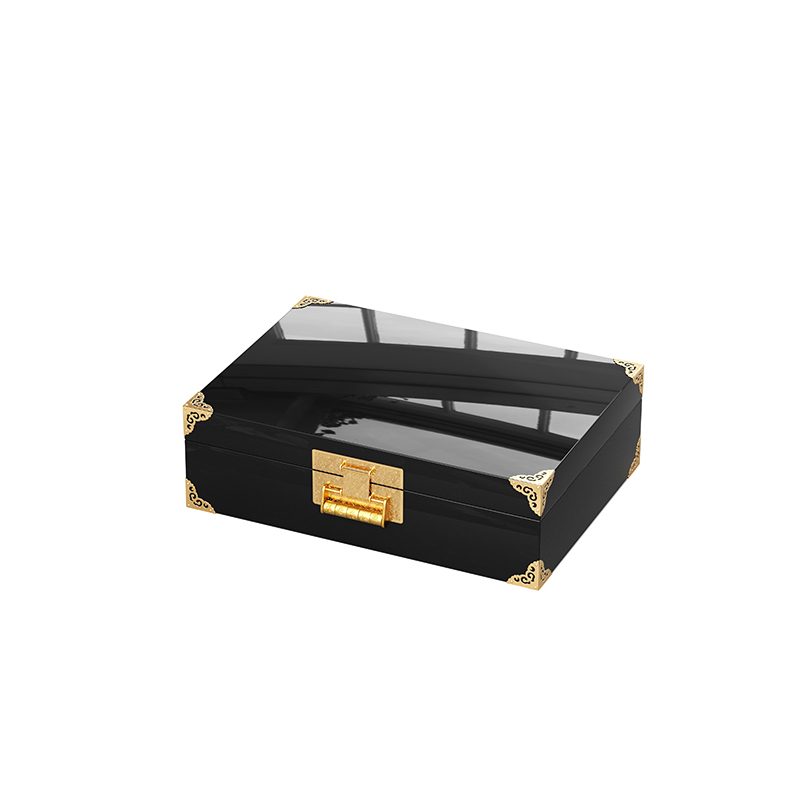
A jewellery brand rarely sells one box — it sells a line. Ring boxes at the counter, necklace boxes for gifts, travel cases for the customer who buys the second piece, display trays for the stockists, and a storage chest for the collector. Every one of those touches the brand, and customers notice when they do not match. Jewellery packaging, done properly, is a coordination exercise as much as a manufacturing one.
This guide covers how a coordinated jewellery packaging line is planned in wood and leather: one material language across formats, the unboxing sequence, branding consistency, and what to check on samples before a line is rolled out.
What a jewellery packaging line has to hold together
Map the formats before designing any single box. A typical line has four layers: presentation boxes that carry a single piece at retail and gifting; travel formats — cases, rolls and pouches — that protect pieces away from home; display trays and cases for counters and stockists; and larger storage chests or cabinets for collectors. Each layer has its own structure, but they share one material language, one colour palette and one mark.
The coordination failure is usually invisible at the sample stage and obvious on the shelf: three boxes that each look fine alone but disagree on wood tone, lining colour or hardware finish. Agree the shared language first, then design the formats within it.
One material language across the line
Choose a dominant body and let secondary formats echo it. A lacquered or veneered wooden body gives crisp edges, a flat stage for foil or laser marking, and consistent colour across a run — which is why it anchors most presentation lines. A leather-wrapped body gives grip, warmth and durability in the formats that travel; its grain and sheen vary naturally, so use it where the hand will touch the box more than the eye will measure it.
Lining is the part buyers under-specify and customers touch first. Velvet and suede dominate jewellery linings for a reason: they hold a piece in place without scratching it, and they photograph well. Fix the lining colour as a standard across the whole line — including trays and travel cases — and record it, because lining is the easiest surface to drift between production runs.
Presentation boxes: start from each product
Each jewellery category sets its own constraints. Rings need the smallest footprint and a slot or dome that seats the band at the right angle; necklaces make length the constraint, with hooks or wraps that stop the chain tangling; earrings are pairs that must stay together; sets and multi-piece presentations need stepped inserts so every piece is visible when the lid opens.
The point at line level is not to redesign each format but to make them read as siblings: the same lid depth logic, the same corner treatment, the same lining colour, the same mark position. Customers who receive two boxes from the same brand should recognise the second one with their hands, before they see it.
The unboxing sequence: outer, fitment, insert
Plan the sequence from the outside in. The outer surface sets the expectation — lacquer, grain or leather, and whether the lid lifts, hinges or slides. The fitment determines the reveal: a piece seated low in a velvet well reads as reserved; a piece raised on a cushion at lid height reads as ceremonial. The insert does the protection: the piece should be held at two points, not gripped at one in the middle where it can pivot and mark the lining.
Test the sequence with the actual piece, not a weight. A clasp, a brooch pin or a pendant bail that sits a millimetre proud of the drawing will catch on the lid, and that is a sampling-stage fix — which is exactly when it should be caught.
Travel cases and pouches in the same language
Travel formats earn their place in the line because they are used repeatedly in public — which makes them quiet advertising. A zipped leather case for two or three pieces, a hard-shell roll for a traveller, and a drawstring pouch for the counter purchase all need the same decisions as the presentation boxes: leather or PU wrap over a rigid body, lining that matches the line standard, and a closure that survives being opened hundreds of times.
Hardware is where travel formats fail first. Zips, snaps and drawstring eyes should be sampled hard: pull the zip fully, work the snap repeatedly, and check that nothing metal can touch the jewellery inside. A pouch that turns a silver chain black is a return, not a review.
Branding that stays identical across formats
A coordinated line needs one mark rendered consistently on different materials. Hot foil on lacquered wood holds fine strokes and metallics; laser marking suits natural and matte wood; debossing is the most durable and discreet option on leather; a metal plaque reads at a distance and works across both bodies. The mistake to avoid is re-choosing the mark per format — the mark's proportions, position and colour should be fixed once and applied everywhere.
Keep a one-page branding standard with the artwork files: mark size relative to lid, position, foil colour, deboss depth reference. It is the cheapest document in the programme and the one that prevents the most drift.
Scaling the line: MOQ and lead times
Custom formats start at 500 pcs per design, which shapes how a line is phased: launch with the two or three presentation boxes that carry the core products, then add travel and storage formats as the line proves itself. Stock designs are available from 50 pcs per style for buyers who need a smaller first step, with 100+ ready-to-ship designs in the current range.
Sampling takes about 15 days per format and includes 3D digital proofing plus two rounds of revision; production runs about 30 days after sample confirmation. Phasing several formats through the same pipeline lets each format's sample rounds overlap the previous format's production instead of serialising the whole line.
What to check on a jewellery packaging sample
| Check | What to look for |
|---|---|
| Lid fit | Closes with even resistance, sits flush on all four sides, no rocking |
| Lining | Colour matches the line standard; edges adhered; no seams where pieces rest |
| Insert fit | Piece held at two points; lid clears clasps and bails; no rattle |
| Hardware | Hinge travel smooth; magnetic catch holds under a lifted load; no bare metal contact |
| Mark | Position, size and foil colour match the branding standard |
| Consistency | Wood tone and finish match across formats in the line |
Quality is built as a sequence — each production step is checked before a batch moves on, and third-party inspection is accepted for bulk orders — but the line-level checks above are the ones only you can make, because they compare formats against each other.
What to send when you request a quote
Drawings are accepted in AI, C4D or PDF. For each format, send the product drawing with its dimensions, the intended insert, the body material, and the branding method and position; for the line as a whole, send the colour and lining standards so every format is quoted against the same language. Enquiries are answered within 24 hours, payments are T/T with a 30% deposit and 70% before shipment, and shipments go out EXW or FOB Guangzhou by express, air or sea.
See custom jewelry boxes for presentation formats, custom leather boxes for wrapped bodies and travel formats, custom rigid boxes for the underlying structures, and our service process for how a line is managed from brief to delivery.
Custom formats start at 500 pcs per design, so most brands launch with the two or three presentation boxes that carry core products and add travel and storage formats later. Stock designs are available from 50 pcs per style, with 100+ ready-to-ship designs in the current range.
Fix a shared material language before designing individual formats: one dominant body, one lining colour recorded as a standard, one hardware finish, and one mark with fixed proportions and position. A one-page branding standard with the artwork files prevents most drift between formats and runs.
Sampling takes about 15 days per format and includes 3D digital proofing plus two rounds of revision. Production runs about 30 days after sample confirmation. Phasing formats through the pipeline lets sample rounds overlap previous formats' production.
Lid fit and hinge travel; lining colour against the line standard; insert fit with the actual piece — held at two points, lid clearing clasps and bails; hardware with no bare metal contact with the jewellery; and wood tone and finish matched across the formats in the line.