Custom Wooden Gift Boxes: Planning Corporate and Festival Gifting in Wood and Leather
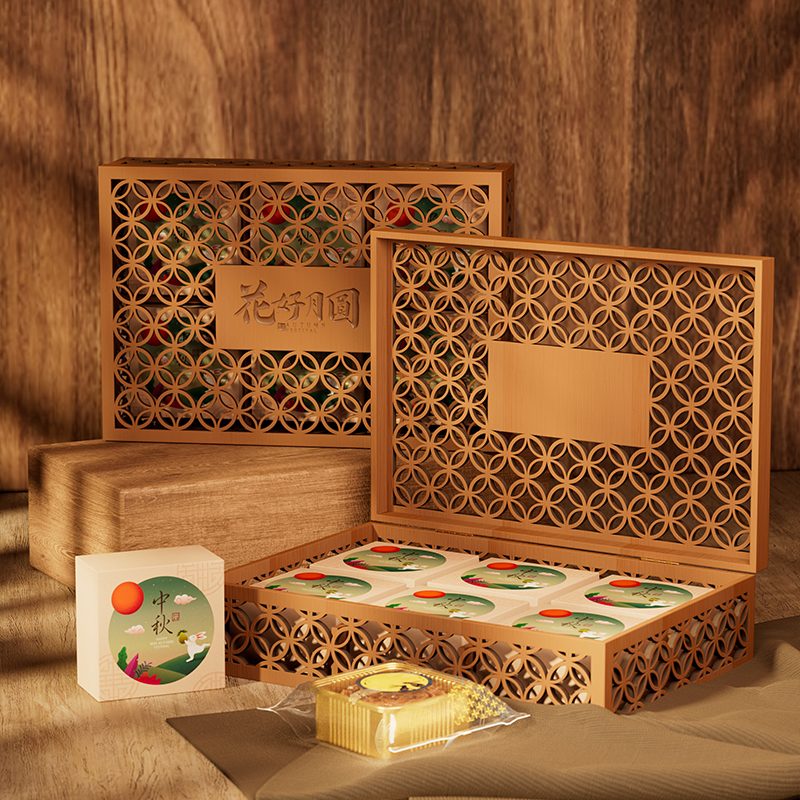
A gift box is judged by two different people at two different moments: the person who approves the order, and the person who receives it months later with no idea what it cost. A wooden or leather gift box has to survive that second judgement, because a gift box is the gift until it is opened. That is a harder brief than a retail carton — and it is the reason gifting programmes are specified differently from everyday product packaging.
This guide covers how corporate and festival gift boxes are planned in wood and leather: the occasions that justify them, the structures that carry mixed contents, how inserts handle gifts that have no fixed shape, and the calendar from brief to shipment.
What a gift box has to do
A gift box carries three loads at once. It protects the contents in transit, it presents them the moment the lid lifts, and it represents the giver for as long as the box is kept. Any one of those can be bought cheaply; all three together cannot, which is why the material decision matters more here than in almost any other packaging category.
Wood and leather earn their place because they age well. A lacquered wooden box still looks finished years later, and a leather-wrapped case develops a patina instead of looking worn. A gift box that gets reused as storage keeps the giver's mark in the room — which is the quiet commercial argument for spending on the body rather than only on the print.
Occasions that call for wood or leather
Three kinds of programmes consistently justify a wooden or leather gift box. Corporate and recognition gifts — service awards, partner thank-yous, delegation gifts — are kept indefinitely, so permanence is the point. Festival gifting — Christmas, mid-autumn, New Year — runs on a fixed date, so the calendar drives every decision. And premium food gifting — mooncakes, tea, dates, wine — needs a structure that presents food with the same care a retail shelf would.
The design intent differs by occasion. A corporate award box is opened once in public and then kept on a shelf, so the closure and the lid moment matter most. A festival box is opened in the home, passed around, and often photographed. A food gift box has to present individual items and survive handling by people who did not pack it.
Structure carries the meaning
The strongest gift boxes we have built take their structure from the occasion, not from a catalogue. A box inspired by a palace gate used the gate's proportions and a deep double-door opening, so the act of opening it felt ceremonial. A mooncake box cut a traditional coin pattern through the solid-wood lid — invert it after the festival and the pattern throws light across the room, which turned a seasonal box into a kept object. An eight-compartment box drawn from a Ming-dynasty format gave eight separate gifts one coherent home, arranged in an octagon for luck.
None of that required exotic materials. It required deciding early what the box should say when it is opened, and then choosing the structure — drawers, double doors, compartments, a lid with depth — that says it. That decision belongs at the brief stage, because it drives tooling, insert design and cost at once.
Wood, veneer or leather: choosing the body
Solid wood gives the most honest surface — visible grain, weight, and edges that can be mitred and finished like furniture. Veneered MDF gives a perfectly flat, stable panel that takes high-gloss piano lacquer or a fine wood grain, at a more predictable cost and with better resistance to warping in humid climates. Leather-wrapped bodies give a soft hand-feel, grip, and corners that can be wrapped, stitched or pinned with metal protectors.
A useful rule: if the box will be stacked, shipped far and opened by hand, wood or veneered MDF wins on structure. If it will be carried — to a ceremony, a client meeting, a hotel room — leather over a rigid body wins on handling. The two combine well: a wooden body with a leather-wrapped lid, or a leather case over a lacquered tray.
Structures for mixed gifts
Corporate and festival programmes rarely contain one item. The usual structures, in rising order of complexity: a lift-off lid over a single fitted tray, which is the most forgiving on tolerances; a tiered box with a shallow upper layer over a deeper one, which presents a set in sequence; drawers, which let the recipient take items out without unpacking the whole box; and double doors, which open wide enough to display the contents without lifting anything out.
Height is the constraint most often missed. In a tiered box, the lid has to clear the tallest item on the upper tier while still looking shallow; in a drawer box, each drawer needs its own height budget and a stop so it cannot fall out when pulled. Both are cheap to fix at sampling and expensive to fix after tooling.
Inserts for gifts with no fixed shape
A watch or a bottle has a drawing; a hamper, an award plaque and a mixed gift set often do not. For irregular contents, the insert is specified as zones rather than cavities: velvet- or suede-wrapped mouldings for items that sit on display, EVA or foam cut-outs for items that must not move, and open lined compartments with removable dividers where the contents change between runs.
If contents will change by season, say so before sampling. A removable divider system costs little more than a fixed insert and lets one box serve several occasions; re-cutting a fixed insert for every new set contents is the expensive version of the same idea.
Branding without overdoing it
A gift box represents the giver, so the mark should read like a signature, not a label. On lacquered or veneered wood, hot foil holds fine strokes and metallics; on matte or natural wood, laser marking and screen printing sit more quietly. On leather, debossing is the most discreet and the most durable; a metal plaque set into the lid suits the ceremonial formats. Engraving and foil also behave differently on edges and curves, which is worth checking on the sample rather than discovering in the shipment.
Position the mark so it is upright when the box is opened toward the recipient, and keep the lid's interior in scope — a printed or foil message inside the lid is often the detail that gets mentioned afterwards.
MOQ, sampling and the calendar
Custom gift boxes start at 500 pcs per design. Sampling takes about 15 days and includes 3D digital proofing plus two rounds of revision, so structure and insert decisions are best made on screen where they are free, not on a physical sample where each round costs time. Production runs about 30 days after sample confirmation.
For festival programmes, work backwards from the delivery date, not the order date: add shipping time to the 30-day production window, and add a buffer for the pre-shipment inspection. Express shipments go by DHL, FedEx or UPS; sea freight in FCL or LCL suits replenishment volume and needs to be booked earlier. Payments are T/T with a 30% deposit and 70% before shipment, and shipments go out EXW or FOB Guangzhou.
What to send when you request a quote
| Field | Why it changes the quote |
|---|---|
| Occasion and delivery date | Sets the calendar for sampling, production and shipping |
| Contents: items, sizes, weights | Decides insert zones, lid clearance and structure |
| Structure: lid, tiers, drawers, doors | Changes tooling, panel sizes and cost |
| Body: solid wood, veneer or leather-wrapped | Changes surface process and branding method |
| Branding method and position | Decides whether a die or plaque is needed |
| Quantity and reuse plan | Sets unit economics and insert flexibility |
| Destination and shipping route | Sets carton specification and freight mode |
Drawings are accepted in AI, C4D or PDF, and enquiries are answered within 24 hours. See custom packaging boxes for programme options, custom wooden boxes and custom leather boxes for the two bodies, custom gift boxes for gifting formats, and contact us to start a brief.
Custom designs start at 500 pcs per design. Sampling takes about 15 days and includes 3D digital proofing plus two rounds of revision, with production in about 30 days after sample confirmation. Stock designs are available from 50 pcs per style if a programme needs a smaller first step.
Yes, if it is specified at sampling. Open lined compartments with removable dividers let one box serve several contents across runs or seasons; re-cutting a fixed insert for every new set of contents is the expensive version of the same idea.
Hot foil holds fine strokes and metallics on lacquered or veneered wood; laser marking and screen printing sit more quietly on matte or natural surfaces; a metal plaque set into the lid suits ceremonial formats. Position the mark so it is upright when the box is opened toward the recipient.
Work backwards from the delivery date: about 15 days for sampling, about 30 days for production after sample confirmation, plus shipping time and a buffer for pre-shipment inspection. Express shipments go by DHL, FedEx or UPS; sea freight in FCL or LCL needs to be booked earlier.
Drawings are accepted in AI, C4D or PDF. Send the contents with sizes and weights, the intended structure, the body material, and the branding method — those fields decide tooling, insert design and cost together.